A next-generation operational system is a way of running the core processes of a business in which software agents carry out the work end to end, inside limits you set, and people handle the exceptions and the governance. It is not a new piece of software you install. It is a different division of labor between people, data and AI. This guide compares the five realistic ways US companies get there, shows what the research says about what separates success from stalled pilots, and gives you a rollout sequence you can start this quarter.
TL;DR
- Next-gen operations means agents executing whole workflows across systems within defined boundaries, with humans owning oversight and exceptions, not just faster task automation.
- The biggest lever is redesigning the process, not buying a smarter model. BCG’s 2026 analysis ties 60% cost reductions to end-to-end redesign, versus under 20% for those who skip it.
- Data interoperability and workflow architecture come before orchestration. Fix those first.
- Your options: suite upgrades, script-based RPA, process orchestration platforms, horizontal copilots, or a custom digital workforce. The right one depends on how much of your work is high-volume, document-heavy and rules-bound.
- Start with one high-value scenario, measure it, then widen the scope.
Table of Contents
- What the term means (and what it does not)
- Why leaders are moving now
- The five ways to build next-generation operations
- How the options compare
- The foundations that decide whether it works
- How to implement: a sequence that works
- Our perspective
- Where our work fits
- Choosing by situation
- Mistakes we see most
- FAQ
- Sources
What the term means (and what it does not)
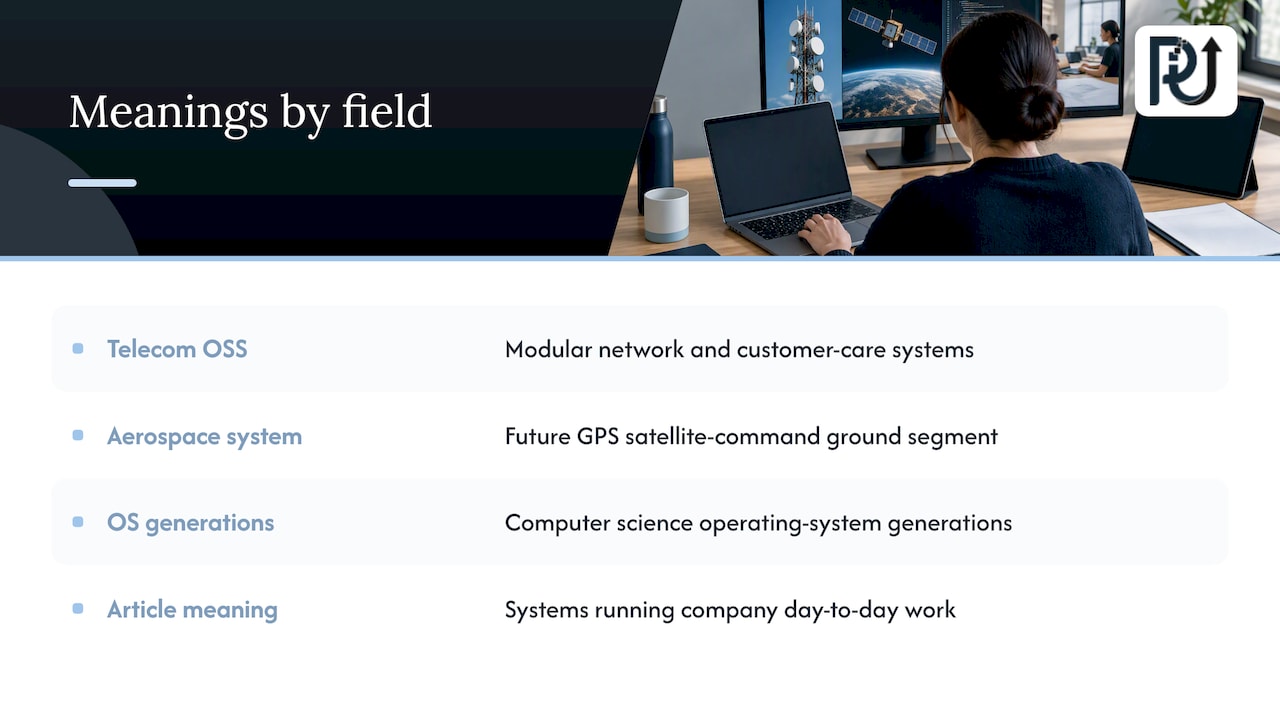
The phrase has several meanings depending on who is searching. In telecom, Next-Generation Operations Support Systems describe modular, scalable back-office systems for managing networks and customer care. In aerospace, the Next Generation Operational Control System is the future ground segment for commanding GPS satellites. Computer science results about operating system generations are a third meaning altogether.
This article covers the fourth meaning, the one a COO, founder or operations director usually has in mind: the systems and operating model that run a company’s day-to-day work. In that sense, the useful definition comes from how large enterprises now describe it. Microsoft’s core business process pattern describes agents that run core processes end to end across multiple systems, make decisions within defined boundaries rather than merely surfacing recommendations, and escalate out-of-bound cases to humans.
That last part matters. Next-gen does not mean unattended. It means the routine 90% of a workflow runs without a person touching it, and the rest arrives in front of the right person with context attached.
Why leaders are moving now
The adoption signals are strong enough to treat this as a planning item, not an experiment:
- The IBM Institute for Business Value reports that 55% of organizations are actively developing or deploying an agentic AI operating model, and 60% plan to adopt next-generation delivery structures where AI agents coordinate integrated workflows.
- Accenture’s research on intelligent operations found that reinvention-ready companies nearly doubled from 9% to 16% over the period studied, and that they were 3.3 times more likely than foundational companies to scale high-value generative AI use cases over the past 12 months.
- Academic work on agentic business process management describes the field as moving through waves, from automating individual tasks toward systems that manage whole processes.
Treat these as industry-level indicators. They say what large organizations report, not what any single mid-sized firm will get. But the direction is consistent: the advantage goes to companies whose data and workflows are ready, not those with the flashiest model.
The five ways to build next-generation operations
Most buying decisions fall into one of five approaches. We describe them by type, because the category fit matters more than the brand.
1. Upgrade the suite you already run
Your ERP, CRM or practice-management system vendor adds AI features. This is the lowest-friction path: single contract, existing data, familiar interface. The limit is scope. Suite features automate steps inside that suite. Real operations cross systems: an invoice arrives by email, gets matched against a contract in one tool, approved in another, and booked in a third. Suite AI rarely owns that whole path.
2. Script-based robotic process automation
RPA bots click through screens the way a person would. They are fast to stand up for stable, repetitive tasks and weak when inputs vary. A new document layout, a changed screen or a missing field breaks the run. They automate the old process as it is, which is exactly the trap BCG warns about: speeding up existing steps without redesigning the work caps your gains.
3. Process orchestration and BPM platforms
These platforms model a process explicitly, run it, and monitor it. Some now add AI agents for discovering, redesigning and improving processes. Strengths: visibility, auditability, a clear control layer. Trade-offs: you need process modelers and developers in-house or on retainer, and the platform is a long-term commitment. A good fit if you have an engineering team and many processes to standardize on one runtime.
4. Horizontal copilots and chat assistants
General assistants help individuals draft, summarize and search. They raise individual productivity but do not own a process outcome. Nobody is accountable when a copilot suggestion is skipped, and nothing routes exceptions. Useful as a layer, insufficient as an operating system.
5. A custom digital workforce
A purpose-built set of context-aware AI agents, wired into your systems, each with a defined job, autonomy limits and an escalation path. This is the approach we build. It costs more thought up front than a plug-in, and it pays back when your work is high-volume, document-heavy, rule-bound and spread across several tools.
How the options compare
| Criterion | Suite upgrade | Script RPA | Orchestration platform | Copilot | Custom digital workforce |
|---|---|---|---|---|---|
| Crosses multiple systems | Limited | Yes, via screens | Yes | No | Yes |
| Handles variable inputs (documents, emails) | Partly | Poorly | With add-ons | Yes, assisted | Yes, by design |
| Owns a process outcome | Partly | No | Yes | No | Yes |
| Exception routing to humans | Basic | Basic | Strong | None | Designed per workflow |
| Internal skills needed | Low | Medium | High | Low | Low to medium, with an engineering partner |
| Fit to your exact process | Vendor’s version | Your old process | Configurable | Generic | Built around you |
| Time to first value | Fast | Fast | Slow to medium | Fast | Medium, scoped to one workflow |
No single column wins everywhere. A ten-person firm with a clean, standard workflow may be well served by a suite feature. A fintech processing thousands of documents a day, or a multi-location healthcare practice reconciling intake, insurance and billing, will outgrow it quickly.
The foundations that decide whether it works
Data interoperability and workflow architecture first
The IBM report names three pillars for safely scaling an agentic operating model: workflow architecture, data interoperability and enterprise orchestration. The order matters. Orchestration cannot be repeatable without a reliable shared source of truth. If customer records disagree across your CRM, billing and ticketing tools, an agent will faithfully act on the disagreement.
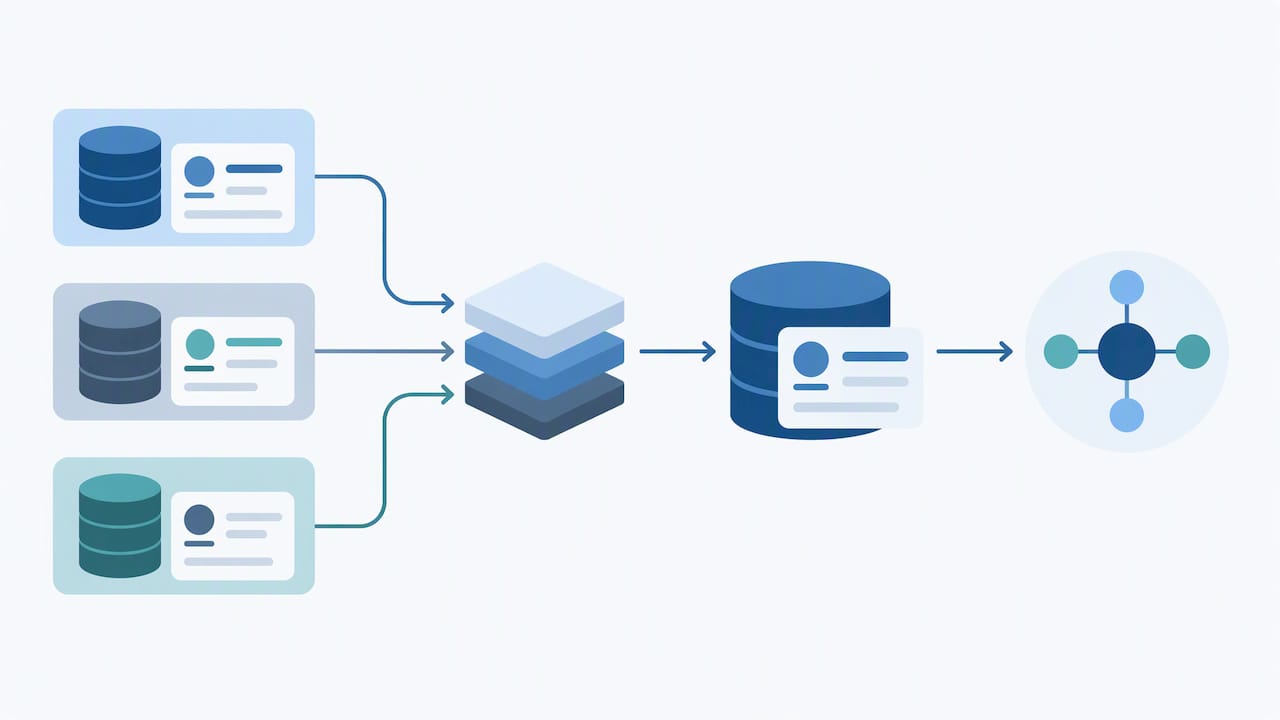
A quick test: pick one customer and trace one transaction by hand across every system it touches. Where you have to retype, reconcile or ask a colleague, you have found an interoperability gap.
Bounded autonomy, not open-ended autonomy
The hard part is not writing prompts. It is deciding what an agent may decide alone. Microsoft’s pattern is built on defined boundaries and exception escalation. In practice, write down for each workflow:
- What the agent can approve, reject or route by itself (for example, invoices under a set threshold that match a purchase order).
- What it must escalate, and to whom (anything above the threshold, any missing field, any conflict between sources).
- What it must log so a reviewer can reconstruct the decision.
Agents without these limits become brittle in production, because every unusual case becomes either a silent error or a stalled queue.
Redesign the process, then automate it
BCG reports that end-to-end process redesign separates organizations achieving 60% cost reductions from those capturing less than 20%. The design question shifts from how to optimize human flow to how to govern AI-driven outcomes. Before you automate, document the process as it really runs. A six-stage approach to documenting a process in 30 days is a useful template, even though it is written for sales operations: the same discipline of mapping stages, owners and hand-offs applies to finance, intake or fulfillment.
Borrow a maturity ladder
Telecom has done this longest. The TM Forum’s autonomous networks work defines six levels, and its Level 4 involves intent-driven predictive analysis and closed-loop management with continuous learning. You do not need a telecom network to use the idea. It forces you to define goals, metrics and governance, not just automate steps. Aim for closed-loop operation in a few high-value scenarios before attempting autonomy everywhere.
How to implement: a sequence that works
- Find the time leaks. List the processes with the highest volume, the most hand-offs and the most rework. Document-heavy intake, reconciliation, onboarding and reporting usually top the list.
- Pick one high-value scenario. Choose something measurable: cycle time, cost per transaction, error rate, hours of manual handling per week. Record the baseline now.
- Map the real process. Interview the people who do the work, not just the managers. Note every exception and its frequency.
- Fix the data path. Make sure the systems involved share identifiers and that the agent can read and write where it needs to.
- Set the autonomy limits. Thresholds, escalation owners, audit logging, and a human review sample for the first weeks.
- Run in shadow mode. Let the agent propose while people decide, compare outcomes, then move routine cases to autonomous execution.
- Measure and expand. Compare to baseline. Only then clone the pattern to the next workflow.
Keep ownership clear. Whoever owns the outcome owns the agent’s rules. If it sits with no one, drift is guaranteed.
Our perspective
We build digital workforces for a living, so we see the same pattern in most engagements. Companies rarely fail because the AI was not clever enough. They fail because the process was never written down, the data lived in five places, or nobody decided what the agent was allowed to do.
So we start with the time leaks, the places where skilled people spend hours on transactional work that follows rules. Then we design the boundaries and the exception paths before we write the first agent. We favor custom, context-aware automation over generic scripts because your documents, approvals and customer rules are specific, and a system built around them is easier to maintain and to own. Clients should end up with systems they can understand, extend and hold us accountable for, not a black box.
We also say no to some projects. If a suite feature already solves your problem, use it. Next-generation does not have to mean bespoke everywhere. It means putting the right level of intelligence where volume and complexity justify it, so you can grow processing volume without growing headcount in step.
— Syed Naveed Abbas
Where our work fits
If your bottleneck is documents, our DocuPOW product reads and validates them, and you can see it in a live demo on the DocuPOW page. For workflows that span several systems, our AI agents development and AI integration services cover the design of the agents, their limits and their connections. For portfolio monitoring and client health analytics, we offer AuraPOW. If you want to talk through a first scenario, start from our services overview.
For more depth, these posts go into specifics: five rules for scaling AI process engineering, the case for governance in AI workflow optimization, and the types of AI agents service teams use.
Choosing by situation
You run a service firm with standard workflows and a small team. Start with suite features and a copilot. Read why service firms standardize with AI before adding anything custom.
You are a fintech, insurer or accounting practice with heavy document flow. The volume and the exception rules justify a purpose-built agent layer. Our guide to AI integration in core banking systems shows how that looks around legacy platforms.
You have an engineering team and dozens of processes. An orchestration platform may be the backbone, with agents added on top.
You are unsure where the leaks are. Run steps 1 to 3 above before buying anything. It costs time, not licenses, and it sharpens every later decision. Our AI automation page explains how we approach that discovery.
Mistakes we see most
- Automating the old process. Faster steps in a broken flow cap your scale.
- Measuring model quality instead of operational readiness. Accenture’s finding that reinvention-ready companies scale generative AI use cases 3.3 times more often points to data foundations and end-to-end integration, not model choice.
- No escalation path. Exceptions pile up unseen and trust collapses.
- Starting everywhere at once. One scenario, measured, beats ten pilots.
- Treating it as an IT project. Operations leaders must own the outcome, and people need to know their role shifts toward oversight, not away from the company.
FAQ
What is the difference between automation and a next-generation operational system?
Automation usually speeds up a single task or a fixed sequence of steps. A next-generation operational system redesigns a whole process so that agents execute it across systems, decide within set limits and escalate exceptions. The difference is ownership of the outcome, not just the speed of the steps.
Will this replace my staff?
The research frames the shift as people moving toward governance and exception handling, with agents doing routine decisions inside defined limits, as in Microsoft’s pattern. Our aim with clients is scaling volume without a matching rise in headcount, which is different from cutting the team. Your own plans for roles are a decision for your leadership.
Where should a mid-sized company start?
Pick one high-volume, rule-bound workflow with a measurable baseline, such as document intake or invoice reconciliation. Map how it really runs, fix the data path, set autonomy limits, and run in shadow mode before going live. Expand only after you have compared results to your baseline.
How do I know my company is ready?
Trace one transaction across every system it touches. If the data matches, the owners are clear and the exceptions are known, you are close. If you retype and reconcile by hand, fix interoperability first, as the IBM blueprint recommends.
Sources
- Core business process transformation pattern, Microsoft Learn
- The blueprint for agentic operations, IBM Institute for Business Value
- Reinventing the Operating System of Work with AI, BCG
- Reinventing enterprise operations, Accenture
- Autonomous Networks Mission, TM Forum
- What is NGOSS, Ciena
- Next Generation Operational Control System, GPS.gov
- Agentic Business Process Management Systems, arXiv