

Business process improvement (BPI) means systematically redesigning how work gets done so a company delivers outcomes faster, cheaper, and with fewer errors, using proven methods like Lean, Six Sigma, and Kaizen. Done right, it cuts cycle times, drops cost per transaction, and raises quality without adding headcount. The rest of this piece breaks down the methods, the step-by-step lifecycle, the tools, and the metrics that separate BPI programs that stick from the ones that quietly die in a slide deck.
TL;DR:
- Most process improvement methods should be matched to specific problems, such as waste, variation, bottlenecks, or cultural gaps, rather than applying a one-size-fits-all framework.
- Successful projects emphasize thorough observation and root cause diagnosis before redesigning workflows to avoid fixing the wrong issues, with baseline metrics established upfront.
- AI-driven process optimization can reduce operating costs by 15 to 35 percent and cycle times by 30 to 50 percent, depending heavily on data quality and project scope.
- Tooling like process mining, task mining, and automation platforms must be fed clean, high-quality data to deliver accurate, actionable insights and recommendations.
- Building continuous process monitoring and automation capabilities turns one-off improvement projects into sustainable, long-term operational excellence.
Table of Contents
- What Is Business Process Improvement, and Who Owns It?
- What Benefits Does Business Process Improvement Actually Deliver?
- Which Business Process Improvement Methodology Should You Use?
- How Do You Actually Run a Process Improvement Project?
- Which Tools Support Business Process Improvement Today?
- What Are the Biggest Pitfalls in Business Process Improvement?
- What Does AI-Enabled Process Improvement Look Like in Practice?
- Should Process Improvement Be a Project or a Permanent Capability?
- Ready to Move From Manual Fixes to AI-Driven Process Improvement?
- Sources
- FAQ
What Is Business Process Improvement, and Who Owns It?
Business process improvement is the discipline of analyzing an existing workflow, finding where it wastes time or money, and redesigning it to hit a specific, measurable target. It’s a subset of the broader field of business process management (BPM), which governs how processes are documented, monitored, and controlled over their lifetime. Think of BPM as the operating system and BPI as the patches and upgrades you run on it. Academic and industry research has cataloged more than 50 distinct methods and techniques for doing this work, which tells you there is no single “right” way, only the right method for the problem in front of you.
Ownership varies by company size. In larger organizations, a process excellence team, a Six Sigma black belt, or an operations VP usually runs BPI initiatives, reporting into a steering committee. In smaller companies, it often falls to whoever owns the P&L for that function, a controller for finance processes, an ops manager for fulfillment. What matters more than title is that someone has authority to change the workflow and the budget to test changes.
Leaders tracking BPI programs typically watch three families of metrics:
- Cycle time, how long a process takes from trigger to completion
- Error and rework rates, how often output fails quality checks or needs redoing
- Cost per transaction, the fully loaded cost of processing one unit of work, whether that’s an invoice, a claim, or a customer ticket
Get those three right and most other business efficiency techniques follow naturally.
What Benefits Does Business Process Improvement Actually Deliver?
The operational gains show up first: higher throughput with the same staff, less rework, and shorter queues between handoffs. A claims team that used to take nine days to settle a routine claim can often get to four or five days once redundant approvals get cut and data entry moves upstream. The organizational gains take longer to surface but matter more over time, employees stop firefighting the same recurring problem, morale improves, and the business becomes easier to scale because the process doesn’t depend on one person’s tribal knowledge.
By the numbers: AI-driven process optimization has been associated with operating-cost reductions of 15 to 35 percent and cycle-time reductions of 30 to 50 percent, though the actual result depends heavily on how clean your baseline data is and how narrowly you scope the project.
Realistic KPIs to set before you start:
- First-pass yield (percentage of work completed correctly without rework)
- Cycle time reduction target (a specific percentage, not “faster”)
- Cost per transaction, tracked monthly, not quarterly
- Customer or employee satisfaction score tied to the specific process
A finance team chasing a faster invoice cycle might set a target of cutting average processing time from twelve days to five within one quarter, a specific enough goal to actually diagnose failure or success.
Which Business Process Improvement Methodology Should You Use?
Most BPI methodologies solve for a different type of problem. Picking one to match your problem type is faster than trying to force one framework onto everything.
- Lean targets waste and flow. Tools like value stream mapping and 5S help teams see where work sits idle between steps, and Lean is the right call when a process has too many handoffs or inventory buildup. ASQ’s 5S tutorial is a solid, free starting point for teams new to it.
- Six Sigma, using the DMAIC cycle (Define, Measure, Analyze, Improve, Control), targets defect and variation reduction. Use it when the problem is measurable inconsistency, error rates on a form, defect rates on a production line, variance in service time.
- Kaizen drives incremental, culture level improvement. Instead of one big redesign, teams run small, continuous experiments. It works best when the goal is building a habit of improvement rather than solving one acute crisis.
- PDCA (Plan, Do, Check, Act) is the iterative testing loop underneath most other methods. Use it whenever you need a structured way to pilot a change before committing to it company-wide.
- Theory of Constraints (TOC) assumes one bottleneck is limiting your entire system’s throughput. Find that constraint, fix it, and the whole process speeds up, even if nothing else changes. TOC is the right call when one step (an approval queue, a single overloaded machine, one understaffed role) is visibly choking everything downstream.
- Total Quality Management (TQM) builds quality into the culture across every department, useful when defects stem from inconsistent standards rather than one broken step.
- Business Process Reengineering (BPR) throws out the existing process and starts from a blank page. Reserve it for processes so outdated or convoluted that incremental fixes won’t get you where you need to be. A BPR deep dive covers what a full redesign actually looks like in practice.
These methodologies, Kaizen, PDCA, Lean, TOC, TQM, and Six Sigma among them, aren’t mutually exclusive. A manufacturing team might run Lean to map the value stream, then apply Six Sigma’s DMAIC to fix the specific defect the map exposed. Choosing correctly comes down to one question: is the problem waste, variation, a single bottleneck, or a cultural gap? Match the method to that answer, not the other way around.
How Do You Actually Run a Process Improvement Project?
Every credible improvement effort follows roughly the same sequence: select and scope, observe, baseline, diagnose, redesign, test, deploy, then measure and maintain. Skipping steps is the single most common reason projects stall.
- Select and scope. Pick a process with clear boundaries, a defined start and end point, and a business sponsor who cares about the outcome. Avoid processes so tangled with other systems that scope keeps creeping.
- Observe. Collect evidence before touching anything, event logs, sample cases pulled from the last quarter, and short interviews with the people actually doing the work day to day.
- Baseline. Establish the current numbers for cycle time, error rate, and cost per transaction. Without this, “improvement” is just an opinion.
- Diagnose root causes. Techniques like the 5 Whys or a fishbone diagram force you past symptoms into the actual cause. A slow invoice process is rarely “slow because it’s slow,” it’s slow because approvals sit in one person’s inbox for three days.
- Redesign. Sketch the future state process, removing unnecessary handoffs and approvals identified in diagnosis.
- Test. Run a bounded pilot, one team, one region, one product line, before rolling out broadly.
- Deploy with guardrails. Roll out to the full population only after the pilot hits its target metrics.
- Measure and maintain. Recheck the baseline metrics on a set schedule and assign someone to own drift, because processes decay without upkeep.
Pro Tip: Never skip the observe step to save time. Teams that jump straight from “we think it’s slow” to redesign almost always fix the wrong bottleneck, because the person closest to the work usually knows something the org chart doesn’t show.
Which Tools Support Business Process Improvement Today?
Process mining reconstructs how a workflow actually runs by analyzing system event logs, timestamps, approvals, handoffs, showing you the real path work takes rather than the one on the flowchart. Task mining looks at a narrower slice: what a person is actually doing at their desktop, click by click, which matters when the bottleneck lives in manual data entry rather than system logic. Combining both with direct interviews gives you the fullest picture of how work really happens, because logs alone miss the workarounds employees invent when the official process doesn’t fit reality.
Once you know where the waste lives, the choice of automation matters:
- Robotic process automation (RPA) handles repetitive, rule-based tasks with stable inputs, think copying data between two systems that never change format.
- Deterministic workflow tools suit processes with clear branching logic but require human judgment at certain steps.
- AI agents fit high-volume, context-dependent work where the input varies, reading unstructured documents, deciding how to route an exception, or holding a conversation with a customer.
Process intelligence platforms layer analytics and dashboards on top of all this, giving you continuous visibility instead of a one-time snapshot. Data quality drives all of it. Process optimization tools are only as good as the event logs and case data feeding them, garbage inputs produce confident-looking, wrong recommendations.
What Are the Biggest Pitfalls in Business Process Improvement?
Governance failures kill more BPI projects than bad methodology choices. Before launch, confirm you have a named process owner, agreed metrics, and a defined rollout plan, without those three, accountability evaporates the moment something goes wrong.
- Assign one accountable process owner, not a committee
- Train the team on both the new process and why it changed, not just the mechanics
- Optimize the workflow before automating it, automating a broken process just makes the mess move faster
- Confirm a rollback plan exists before deployment, not after a failure
Pro Tip: If a team can’t explain why a step exists, that’s usually your first candidate for removal, not automation. Business process automation should execute a proven future state, never prop up a broken one.
What Does AI-Enabled Process Improvement Look Like in Practice?
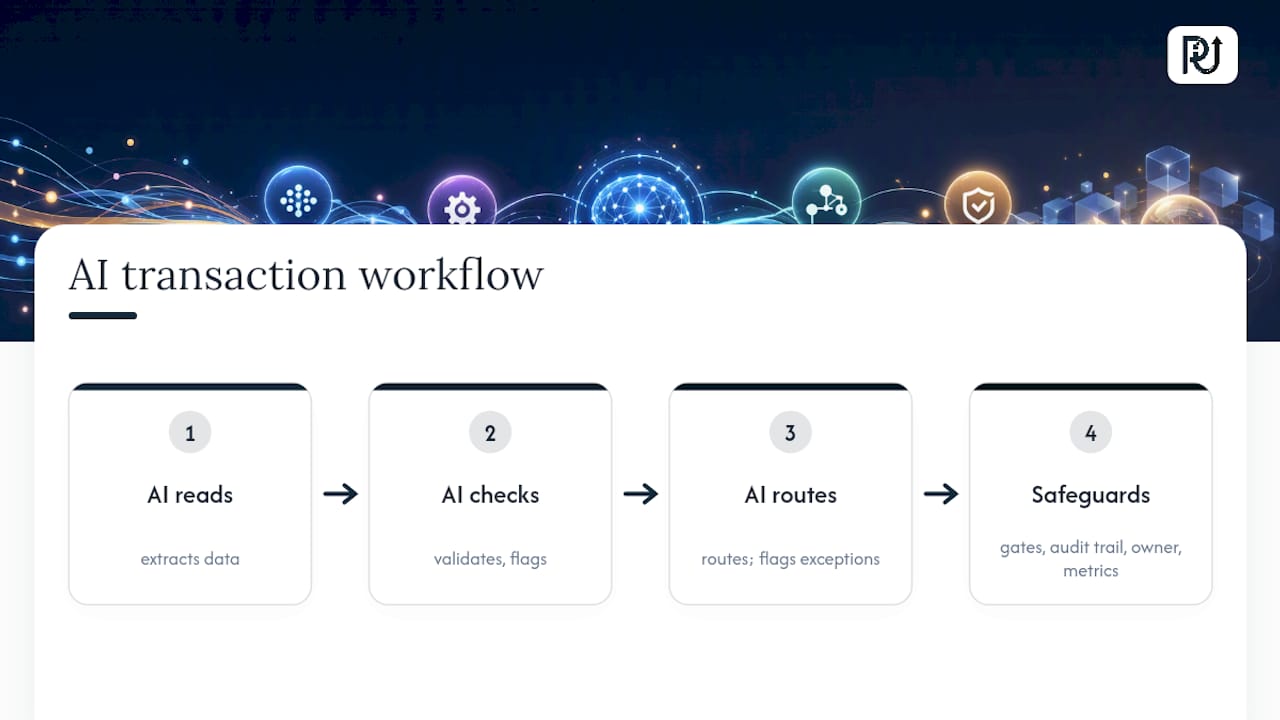
A common pattern for client work at AI integration firms involves high-volume document processing, invoice validation, claims intake, onboarding paperwork, where an AI agent reads, checks, and routes transactions inside strict guardrails: approval gates for exceptions, full audit trails, and a named human owner for anything the agent can’t resolve. Outcomes get measured against the same cycle time, error rate, and cost per transaction benchmarks any BPI program uses. That’s the practical safeguard checklist that keeps AI-driven steps auditable rather than opaque.
Should Process Improvement Be a Project or a Permanent Capability?
Tactical projects work fine for isolated, one-off problems with a clear end date. But once a company runs several improvement efforts a year, building continuous process intelligence, governed monitoring paired with ongoing discovery, turns those one-off wins into a lasting capability instead of a repeating fire drill.
— Syed Naveed Abbas
Ready to Move From Manual Fixes to AI-Driven Process Improvement?
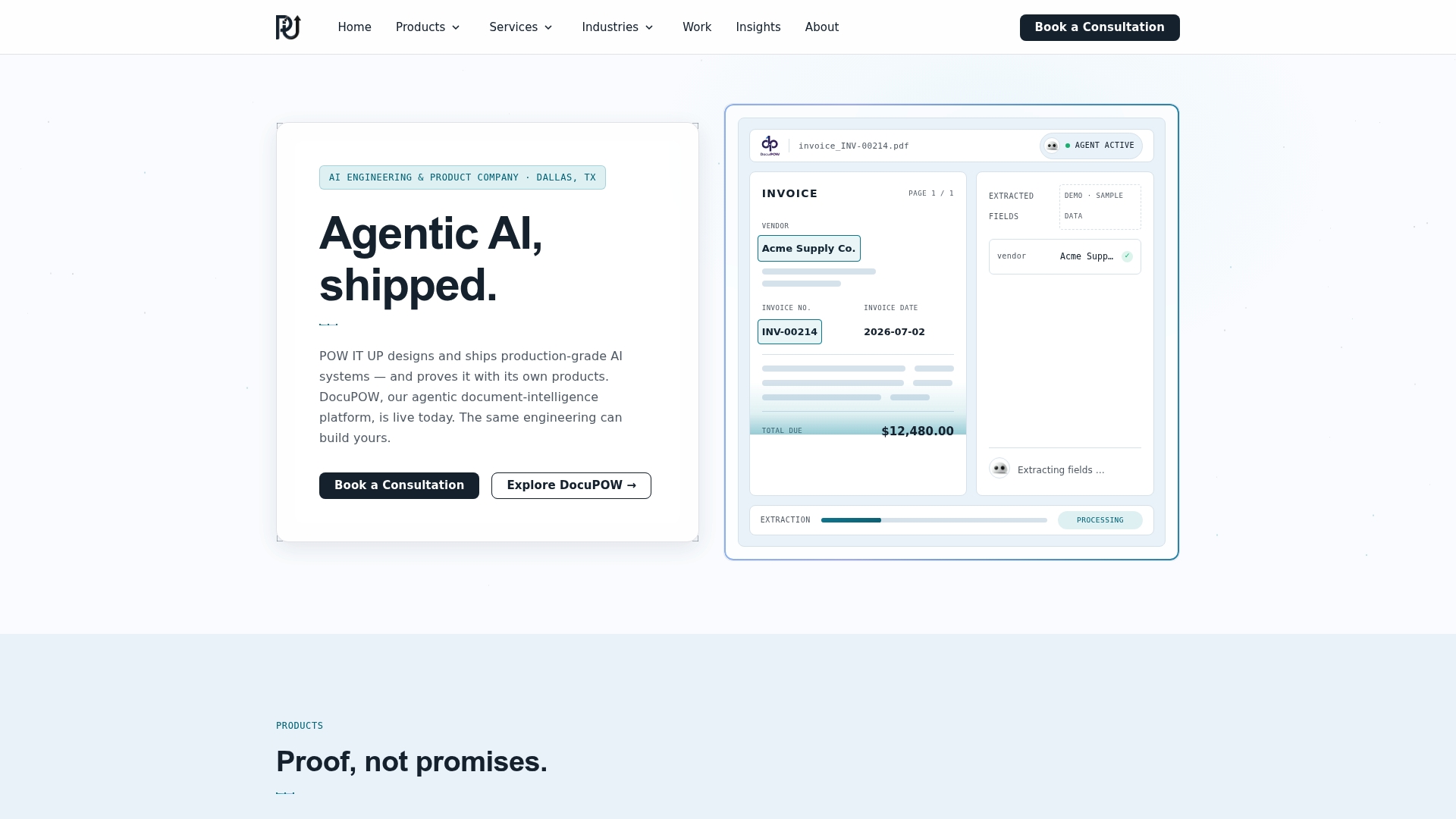
Some AI integration firms are built for the moment your team has already mapped the process, picked the methodology, and hit the point where manual fixes stop scaling, deploying custom AI agents that handle the high-volume, judgment-heavy work Lean and Six Sigma alone can’t automate. Where a traditional consulting engagement hands you a redesign document and leaves you to build it, some firms design and deploy the actual working system: AI agents with approval gates, audit trails, and measurable KPIs baked in from day one.
If your team has a bounded pilot ready, invoice validation, claims routing, onboarding intake, and needs an engineering partner rather than another framework, that’s the point to bring in outside help. Explore AI integration services built specifically for scaling transactional workflows without adding headcount, and book a discovery call to see whether your process is ready for an AI agent to run it.
Sources
For deeper method breakdowns, see TechTarget’s BPI lifecycle overview and Coursera’s methodology comparison.
- Organizational Science article (DOI reference)
- What is Business Process Improvement (BPI)? — TechTarget
- What is Process Optimization? — Salesforce
- What is process intelligence? — ARIS
FAQ
What are the main types of process improvement methodologies?
The most widely used methodologies are Lean, Six Sigma, Kaizen, PDCA, Theory of Constraints, Total Quality Management, and Business Process Reengineering, each suited to a different type of problem, from waste reduction to full redesign.
What are some real examples of business process improvements?
Common examples include cutting invoice processing time by removing redundant approvals, automating shipping label generation to reduce fulfillment errors, and using AI agents to validate onboarding documents before they reach a human reviewer.
What are the 5 P’s often referenced in quality improvement?
Definitions of the “5 P’s” vary by industry and source, so there’s no single agreed-upon version worth stating as fact here; teams are better served focusing on the concrete metrics that actually drive quality, like first-pass yield and error rate.
What are some practical process improvement ideas to start with?
Start by mapping the current workflow to find redundant handoffs, then apply the 5S method to organize the workspace or system, and use the 5 Whys to trace recurring errors back to their root cause before considering automation.
Does POW IT UP help with business process improvement directly?
Yes, POW IT UP designs and deploys custom AI agents and automation systems specifically for high-volume, transactional processes once a company has diagnosed and redesigned the workflow it wants to scale.