

Autonomous operations let a growing company process more work without hiring at the same rate. Software agents read the inputs, decide within rules you set, act across your systems and hand people only the exceptions. The companies that get this right build the control layer first and the autonomy second. We build custom, context-aware AI agents and digital workforces at POW IT UP, and this guide covers what the shift means, where it pays off and how to start.
TL;DR
- Autonomous operations are systems that sense what is happening, decide within your rules and act across your tools, with people supervising by design.
- The biggest gains sit in coordination work between systems: reconciling data, reading documents, chasing exceptions. Bain estimates 40-60% of customer support workflow tasks and 35-45% of finance tasks are automatable.
- Firms furthest ahead invested in oversight and governance before autonomy, and fewer than half of firms mandate a formal governance framework.
- Start with one high-volume process, define the human role and the metrics, then widen the scope in stages.
Table of Contents
- What autonomous operations actually mean
- How autonomous systems coordinate your business software
- Where AI agents can take on work today
- Growth without a matching rise in headcount
- Guardrails that let you give agents real authority
- From pilot to scale: a six-step path
- Our perspective
- Talk to us about your first autonomous process
- FAQ
- Sources
What autonomous operations actually mean
The phrase gets used loosely, so a plain definition helps. Gartner describes autonomous business as an AI-powered strategy that uses adaptable technology to make decisions, take action and create new types of value. In operations, that means systems that monitor performance around the clock, decide on live data and correct things that drift off track without a ticket to IT.
Three layers are easy to confuse:
- Task automation follows fixed rules. If a field equals X, move the record to Y. It breaks when the input changes shape.
- Agentic AI adds judgment. An agent reads a messy input, weighs context and picks an action.
- Autonomous operations are the organization-wide reach of those agents: many processes, end to end, with escalation to people built in.
Gartner frames this as a strategic shift beyond digital business, one that asks leaders to rethink competitive strategy and not only the technology plan. For a founder or COO, the practical reading is simple. You stop asking what a tool can do for an employee and start asking which outcomes a digital workforce can own.
How autonomous systems coordinate your business software
Most growing companies already run a CRM, an accounting system, a billing platform, a support desk and a pile of spreadsheets. The slow, expensive part is rarely inside one system. It is the human work between them: pulling a figure from one tool, checking it against another, interpreting an ambiguous customer email and deciding whether to escalate.
An autonomous setup puts an orchestration layer over that landscape. In general terms, the layer does five jobs:
- It decides which agent handles each step.
- It gives that agent the context it needs and only the system access it should have.
- It keeps track of state, so each step builds on the last instead of starting cold.
- It retries, pauses or escalates when something fails or looks wrong.
- It logs every action so you can see who or what did what, and why.
The last point matters most for regulated work. In fintech and healthcare, an agent that acts without a trail is a liability. An agent that acts within defined permissions, with every tool call recorded and destructive actions such as writes, deletes or outbound messages passing an approval step, is something a compliance team can review.
That is why we design these systems as maintainable engineering and not as a pile of scripts. Our approach to AI integration starts from the systems you already run and the permissions each agent should hold. For the wider picture of how this fits a scaling business, see our guide to intelligent growth systems.
Where AI agents can take on work today
Not every function is equally ready. Bain & Company’s 2026 research on agentic AI estimates the share of workflow tasks that can be automated by function, and the spread is useful for deciding where to look first.
| Function | Estimated automatable workflow tasks | Why |
|---|---|---|
| Customer support | About 40-60% | High volume, repeatable resolution paths |
| R&D and engineering | About 40-60% | Structured, testable work |
| Finance and HR | About 35-45% | Accounts payable and payroll at the high end |
| Sales and IT | About 30-40% | Mixed routine and judgment |
| Legal | About 20-30% | Contract review repeats, but errors are costly |
The figures come from Bain’s 2026 agentic AI research. Read the pattern, not the exact percentages. Work that is high in volume, has clear rules and has a defined cost of error moves first. Work where one mistake is severe gets more human review, not none.
Bain also finds the best opportunities where no single system of record owns the outcome, and where the decision depends on context spread across ERP, CRM, billing and support. That describes most mid-sized companies. A few examples of what this looks like by sector:
- Fintech and accounting firms: reading invoices, statements and onboarding documents, validating them against rules and flagging mismatches. Our DocuPOW product is built for document reading and validation.
- Portfolio and client-based businesses: watching accounts for signs that a client is drifting. AuraPOW is our tool for portfolio monitoring and client health analytics.
- Healthcare practices: routing intake paperwork and scheduling inputs so staff handle patients, not forms.
- E-commerce and logistics: keeping orders, inventory and customer messages in sync across platforms.
Growth without a matching rise in headcount
The business case is not that people disappear. It is that volume can rise while the team that supervises it grows far more slowly.
The evidence deserves a sober reading. A 2026 Harvard Business School working paper studied 202 AI-active US enterprises and found that stronger AI operating-model behaviors were associated with greater improvement in return on assets and operating margin. The authors note that the financial data from 2022 to 2025 came before the 2026 assessment, so it shows an association with performance and does not prove cause. What it does give you is a list of what strong operators do. The study names seven domains:
- AI strategy and oversight
- People and culture
- AI development
- Orchestration
- Organizational memory and context curation
- Agent execution
- Monitoring and evaluation
Only one of the seven is the agent itself. The rest is the operating model around it, and that is where most pilots stall.
The market sizing points the same way. Bain estimates a $100 billion US opportunity for agentic AI that automates cross-system coordination, with vendors capturing $4-6 billion so far and more than 90% untapped. For a company in a growth phase, that gap is a window in which you can build operational capacity ahead of competitors who still scale by hiring.
What changes for your team
An MIT Press review of the agent-centric enterprise describes a model where agents act and humans supervise, coach and handle exceptions. It also says the large productivity gains reported by practitioners need more systematic replication, so plan on your own measurements and not on a headline multiplier. In practice, your best operators become reviewers and designers of the process. That is a promotion in responsibility, and it works only if you redesign the role deliberately.
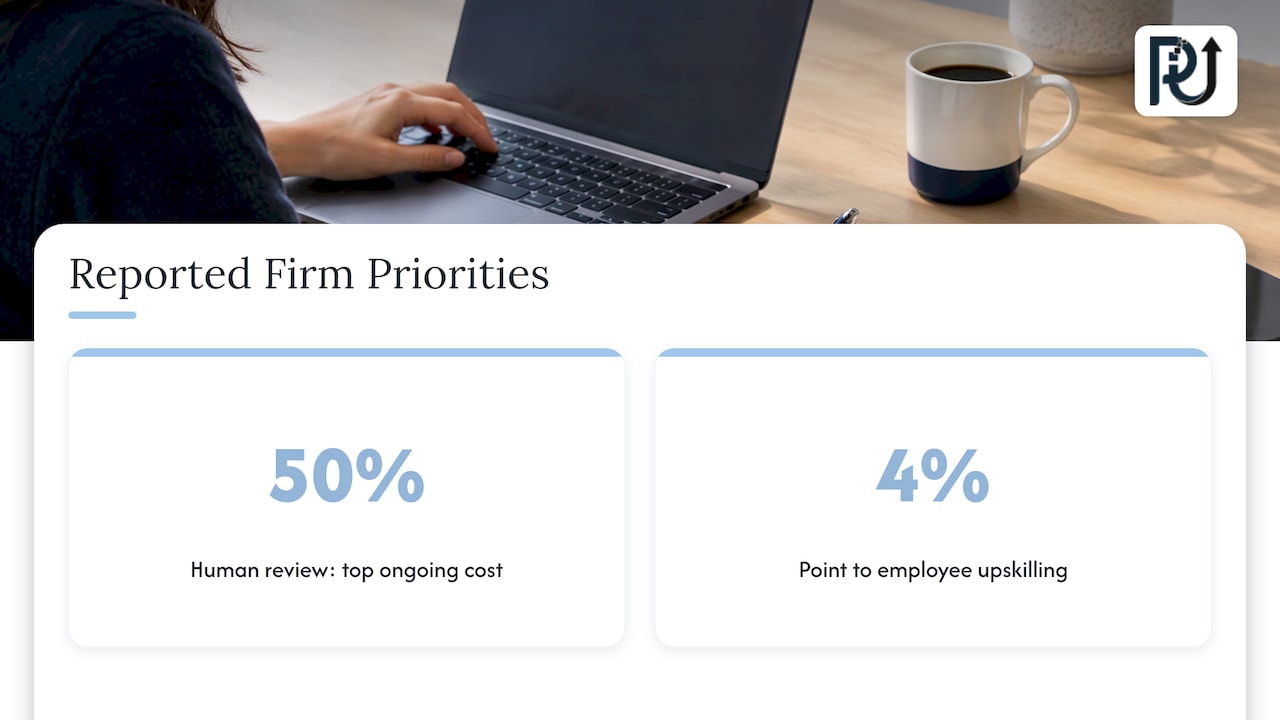
The Economist Enterprise report Making AI deliver adds a cultural point: task-level job redesign, training and incentives most often decide whether AI scales. Half of firms cite human review as a top ongoing cost, while only 4% point to upskilling employees. Budget for both.
Guardrails that let you give agents real authority
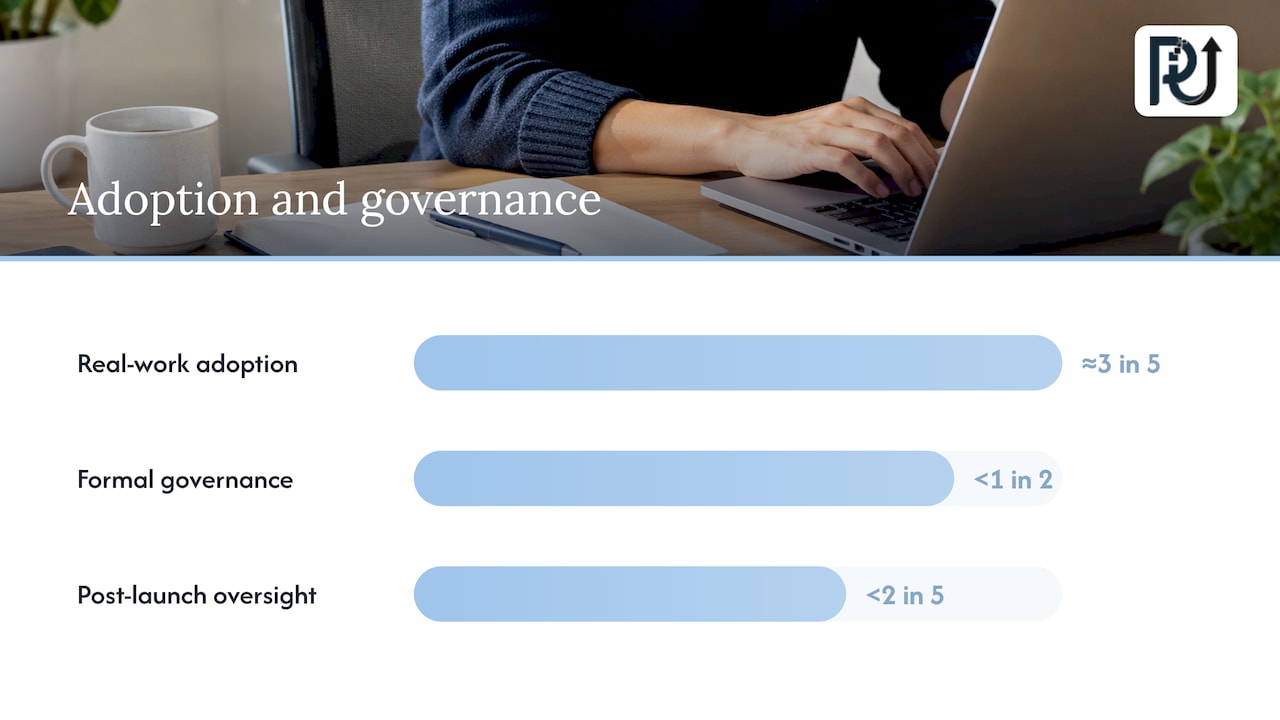
Autonomy without controls is how a pilot becomes an incident. The same Economist survey of 1,221 respondents at companies with $500 million or more in revenue found that about three in five leading adopters now have autonomous systems doing real work. Yet fewer than half mandate a formal governance framework, and fewer than two in five keep up AI oversight after a system goes live. It also found that the firms furthest ahead invested in the control layer before investing in autonomy.
A 2025 study of 22 business-process-management practitioners lists the concerns leaders raise: bias, over-reliance, cybersecurity, job displacement and unclear decisions. The same study lists the safeguards: legal and ethical guardrails, defined human and agent roles, autonomy set to context, risk monitoring, transparent records and fallback mechanisms.
Turn those into a working checklist before any agent goes live:
- Permissions: each agent gets the minimum access its task needs.
- Approval gates: actions that write, delete, pay or send externally require an automated check, a human sign-off or both.
- Accountability: for every handoff you can say who authorized the action, which agent ran it and which policy applied.
- Fallbacks: when confidence is low or a system is down, the work goes to a named person.
- Ongoing review: oversight continues after launch, with a named owner and a schedule.
If your agents produce customer-facing content, the same discipline applies to voice and brand. This piece on AI content governance and brand judgment shows how to set human checkpoints where judgment matters most. In healthcare and financial services, also involve your compliance lead or counsel early, because rules on data handling and automated decisions depend on your sector and state.
Our view on governance as a driver of results is covered in a separate guide.
From pilot to scale: a six-step path
Big companies run broad pilots. You can get most of the value with a narrower one.
- Pick one process with volume and clear rules. Document intake, invoice matching, client onboarding and support triage are typical. Write down who does it today, how long it takes and how often it goes wrong.
- Define the human role first. Decide who reviews exceptions, what they can override and how fast they must respond.
- Set the metrics before you build. Measure cycle time, error rate, exception rate, cost per transaction and hours of staff time returned. Compare against the pre-pilot baseline, not against a vendor’s claims.
- Build with logging from day one. Every decision and tool call should be traceable.
- Run in assisted mode, then widen autonomy. Let the agent propose while people approve. Move to autonomous handling for the categories where approvals are almost always accepted.
- Add the next process on the same foundation. Shared context, orchestration and monitoring should be reused, not rebuilt.
The temptation is to chase the whole company at once. Resist it. A single process that visibly works gives you the data and the internal trust to fund the next one. Our guide to scaling AI operations past the pilot goes deeper on the engineering behind steps four to six, and expanding across teams follows the same logic as strategic marketing planning with AI: start with one repeatable workflow, measure it, then extend.
What to measure
Pick a small set and report it monthly:
- Throughput: transactions processed per person supervising.
- Quality: error and rework rates against the manual baseline.
- Speed: time from input received to action completed.
- Exceptions: share of work escalated, and why. A falling rate means the agent is learning your rules. A rising one means the inputs changed.
- Capacity: volume absorbed without new hires.
Our perspective
Most of the operations leaders we talk to are not short of ideas. They are short of hours, and the hours leak out through work that sits between systems: re-keying, checking, chasing, reconciling.
We build digital workforces, custom AI agents with context about your business, to take that work on. We do not think of this as scripting integrations. We think of it as engineering a system your team can understand, maintain and own.
That is why we put so much weight on accountability. An agent that reads a document, validates it and routes it should leave a record you can inspect. DocuPOW, our document reading and validation product, comes with live demos so a leader can see the behavior on real document types before committing to anything larger.
Our advice is to start narrow and build the control layer in step with the autonomy. The companies that scale volume without scaling headcount are the ones whose people supervise the system well, not the ones that removed people first.
Syed Naveed Abbas
Talk to us about your first autonomous process
If you have a high-volume process that eats your team’s week, we can scope an agent for it. POW IT UP designs, builds and deploys custom AI agents and digital workforces for fintech, healthcare, service businesses, e-commerce and logistics teams. Start with AI agents development, or see how AI automation fits your existing systems.
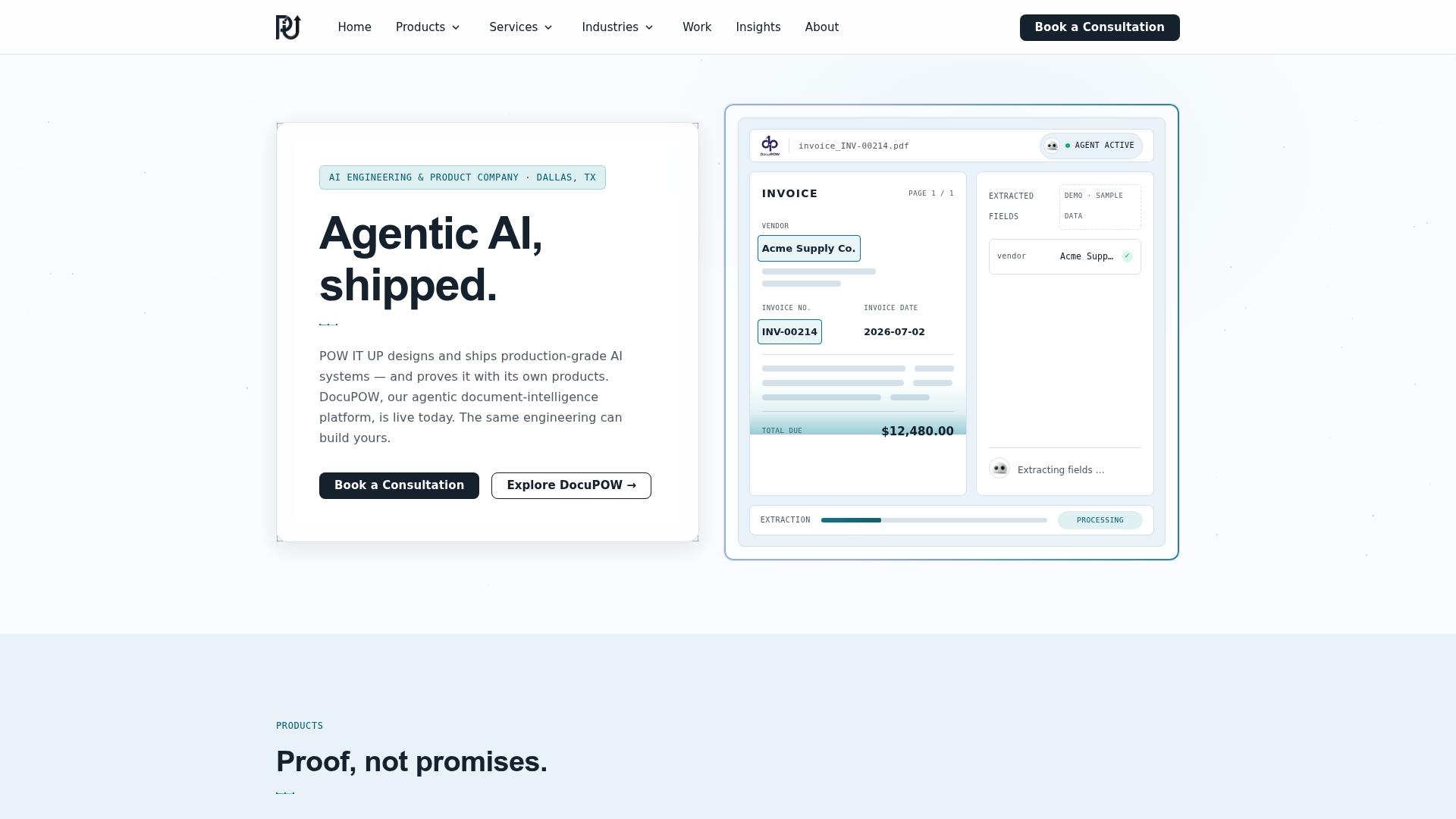
If documents are your bottleneck, ask for a live demo of DocuPOW. To discuss a larger build, start from our main site.
FAQ
What does an autonomous company mean?
It means a company where software senses operational signals, reasons over them with business rules and acts across end-to-end processes. People supervise by design and handle exceptions. It does not mean a company with no staff.
How is autonomous operations different from regular automation?
Regular automation follows fixed rules and fails when inputs change. Autonomous operations use AI agents that read context, decide within limits you set and escalate what they cannot resolve. The scope is also wider: whole processes, not single tasks.
Which work should a growing company automate first?
Choose a process with high volume, clear rules and a measurable cost, such as document intake, invoice matching or support triage. Bain’s function-level estimates put customer support, engineering, finance and HR among the most automatable. Work with severe error consequences, like legal review, keeps heavier human oversight.
Will autonomous operations replace my team?
The research describes people moving into supervising, coaching and exception handling. Plan for role redesign and training, since survey data shows few firms invest in upskilling. Our own aim is to let you add volume without adding headcount at the same rate.
What should I measure to know it is working?
Track cycle time, error rate, exception rate, cost per transaction and the volume handled per supervising employee. Set the baseline before the pilot starts, and review the numbers monthly.
Sources
- Autonomous Business Is Coming, Powered by AI (Gartner)
- SaaS’ next $100 billion opportunity could come from agentic AI (Bain & Company)
- Organizing AI at Enterprise Scale: Agentic Operating Models (Harvard Business School)
- The Agent-Centric Enterprise (MIT Press, Harvard Data Science Review)
- Making AI deliver (The Economist Enterprise)
- Agentic Business Process Management: Practitioner Perspectives (arXiv)